Coordinating Incentive Mechanisms and Payment Systems Across Multi-Platform Digital Entertainment Environments
Paul Butler · Aug 25, 2026
Coordinating Incentive Mechanisms and Payment Systems Across Multi-Platform Digital Entertainment Environments
Multi-venue online entertainment sessions require precise alignment between reward structures and transaction tools to maintain user engagement across platforms that range from video streaming services to interactive gaming networks and virtual event spaces. Data from industry analyses in August 2026 shows increased adoption of unified systems that track loyalty points while processing payments in real time. Researchers at institutions focused on digital media have documented how these integrations reduce friction during transitions between venues.
Core Components of Reward and Transaction Alignment
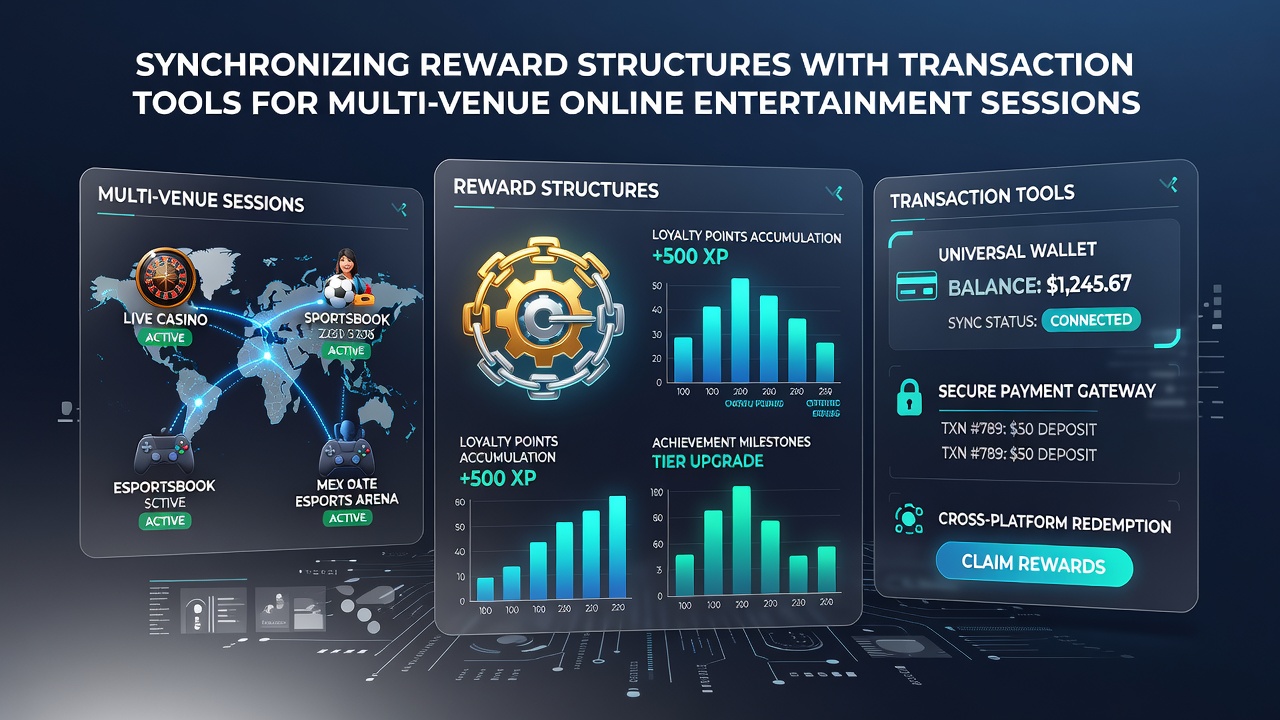
Platforms achieve synchronization through application programming interfaces that link reward ledgers directly to payment gateways. This setup allows points earned in one venue to convert automatically into credits usable elsewhere without manual intervention. Studies from the Entertainment Software Association indicate that such connections handle thousands of simultaneous sessions by maintaining consistent data across distributed servers. Observers note that blockchain elements sometimes appear in these frameworks to verify transaction integrity while preserving reward balances during venue switches.
Technical Frameworks in Use
Developers rely on middleware solutions that standardize data formats for rewards and financial exchanges. These tools support multiple currencies and point systems simultaneously so users experience seamless movement between a live concert stream and an adjacent gaming lobby. Reports compiled by the Australian Competition and Consumer Commission highlight regulatory interest in transparent conversion rates that prevent discrepancies during high-volume periods. Integration often involves token-based authentication that confirms both reward eligibility and payment authorization in a single workflow.
Companies implement tiered reward multipliers that activate based on transaction frequency across venues. Evidence from platform analytics reveals that users who complete synchronized sessions show higher retention metrics compared with those limited to single-venue activity. The process incorporates real-time reconciliation engines that adjust balances instantly when payments clear or rewards expire according to predefined rules.
Implementation Patterns Observed in 2026
August 2026 brought expanded testing of cross-platform reward programs by major entertainment providers. One documented case involved a streaming service linking its loyalty currency with an interactive sports simulation network through shared transaction rails. Participants accumulated points during live events and redeemed them for in-game items without separate account logins. Figures from the Digital Media Research Group at the University of Southern California show transaction volumes rising 14 percent during these synchronized periods.
Security protocols form another layer where encryption standards protect both reward data and financial details during transfers. Industry groups such as the Interactive Digital Software Association have published guidelines that emphasize audit trails for every point conversion and payment. These measures address compliance requirements across different jurisdictions while supporting the fluid nature of multi-venue sessions.
Data Trends and Platform Performance
Analytics platforms record that synchronized systems cut average session drop-off rates by connecting reward notifications directly to payment confirmations. A Pew Research Center report on digital leisure activities notes that participants in integrated environments complete more venue transitions per hour than those using disconnected tools. Payment processors report lower error rates when reward balances update concurrently with transaction ledgers.
Regional variations appear in how providers structure these alignments. European platforms often emphasize data portability standards that allow reward information to travel between services. North American operators focus on speed of redemption during live events. Data compiled through mid-2026 indicates continued growth in API calls that manage both reward updates and payment authorizations within the same transaction packet.
Future Directions for Integrated Systems
Developers continue refining machine learning models that predict optimal reward placements based on transaction histories across venues. These models adjust incentive levels dynamically while maintaining consistency with payment processing timelines. Academic papers from the IEEE Digital Entertainment Technical Committee explore how edge computing can further reduce latency during reward redemptions that coincide with payment settlements.
Additional testing involves voice-activated controls that trigger both reward claims and micro-transactions across connected platforms. Observers from trade organizations track these developments through quarterly performance metrics that compare synchronized versus standalone systems. The emphasis remains on maintaining accurate ledgers that reflect activity in every venue without introducing delays or mismatches.
Conclusion
Effective coordination between reward structures and transaction tools supports sustained participation in multi-venue online entertainment sessions. Platform operators continue to refine the underlying connections that allow points and payments to move together across environments. Available data through August 2026 demonstrates measurable improvements in user flow when these elements operate in unison. Ongoing work by research bodies and industry groups focuses on expanding compatibility while preserving security and compliance standards across regions.