Digital Wallets Driving New Accumulator Approaches in UK Horse Racing and Football Platforms
Jakob Weber · Jun 9, 2026

Digital Wallets Driving New Accumulator Approaches in UK Horse Racing and Football Platforms
Digital wallet integration continues to alter how accumulators function within UK racing and football applications, with payment pathways enabling faster stake adjustments and multi-leg selections. Observers note that seamless transaction processing supports the layering of bets across events, while real-time balance updates reduce interruptions during live markets.
Platforms handling horse racing fixtures and Premier League matches have incorporated these tools to streamline accumulator construction, and data from industry reports indicates rising transaction volumes through e-wallet channels in early 2026. Researchers tracking payment trends highlight how instant verification allows bettors to combine selections from different tracks and stadiums without traditional banking delays.
Payment Speed and Accumulator Construction
Accumulator strategies rely on combining multiple outcomes into single wagers, and digital wallets accelerate the process by confirming deposits within seconds. Those who monitor app usage patterns report that users frequently add or remove legs mid-session because wallet balances refresh immediately after each transaction. This capability proves especially relevant during racing meetings at Ascot or Newmarket, where odds shift rapidly between races, and football accumulators spanning weekend fixtures benefit from the same fluidity.
Studies on fintech adoption in entertainment sectors show that reduced processing times correlate with higher volumes of multi-leg bets, although exact figures vary by operator and region. Experts tracking June 2026 activity note sustained growth in wallet-linked accounts, which coincides with major racing festivals and international football qualifiers.
Regional Variations Across UK Apps
Different applications serving UK markets display distinct patterns of wallet utilization for accumulators. Northern operators often emphasize integration with local banking networks, whereas southern platforms prioritize cross-border wallet options that accommodate international fixtures. Data indicates that football accumulators involving European competitions draw heavier wallet traffic than domestic horse racing bets, partly because timing windows for live odds differ.
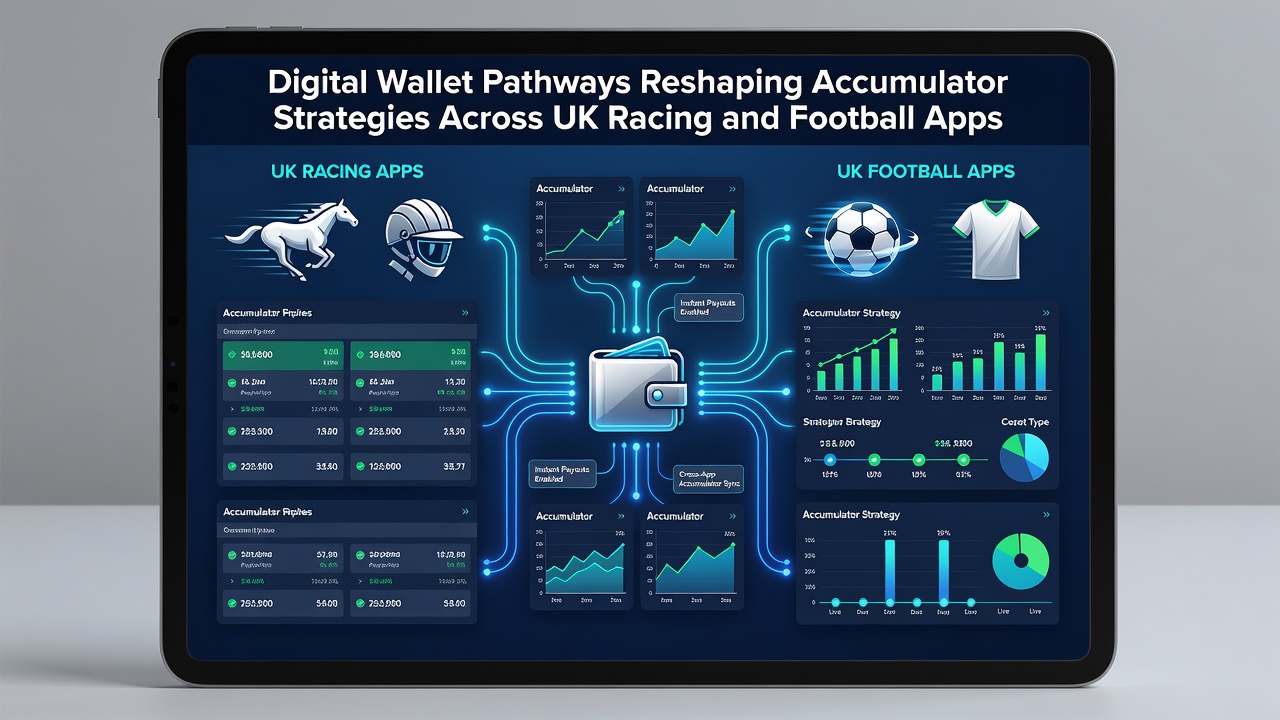
Analysts from various regulatory bodies across Europe and North America have documented similar shifts in payment preferences, and one Australian Institute for Gambling Research report outlines parallel developments in digital transaction efficiency. These observations suggest that accumulator complexity increases when friction around funding decreases, allowing more granular control over stake distribution across selections.
Data Trends in 2026
Figures released in mid-2026 reveal continued expansion of wallet usage in sports betting applications, with accumulator-related transactions forming a notable share. Industry associations in Canada and the EU have published comparable statistics, and one Canadian Gaming Association summary connects faster payment rails to elevated engagement in multi-event wagers. UK racing calendars and football schedules create overlapping periods where such tools see peak demand, particularly around major events.
Researchers emphasize that security protocols within these wallets maintain verification standards even as speeds improve, which supports sustained user confidence in accumulator placements. Patterns observed in June 2026 align with broader digital finance adoption rates reported across entertainment sectors.
Accumulator Adjustments in Real Time
Real-time odds feeds combined with instant wallet access enable users to recalibrate accumulators as events unfold. Football matches with in-play markets and horse races featuring non-runners both illustrate scenarios where quick funding changes matter. Observers note that applications providing clear wallet status indicators reduce errors during these adjustments, and data sets from multiple operators confirm higher completion rates for modified multi-leg bets.
Technical updates rolled out earlier in 2026 further refined these pathways, allowing accumulators to incorporate selections from both racing and football within single sessions. Such flexibility reflects ongoing platform development rather than isolated trends.
Conclusion
Digital wallet pathways continue to influence accumulator strategies across UK racing and football applications by streamlining funding and verification steps. Evidence from transaction records and industry summaries points to measurable shifts in how multi-leg wagers are assembled and adjusted, particularly during periods of high fixture density in 2026. These developments remain tied to broader payment technology adoption rather than sector-specific factors alone.