Integrating Live Data Feeds with Instant Payments for UK Sports Betting Markets
Paul Butler · May 24, 2026

Integrating Live Data Feeds with Instant Payments for UK Sports Betting Markets
Live sports betting in the UK relies on precise alignment between incoming event data and deposit systems that move funds without delay, allowing wagers to lock in before odds shift. Observers note that platforms achieve this through layered APIs pulling statistics, scores, and market movements while payment processors handle transactions in seconds rather than minutes. Data from industry reports shows that synchronization failures drop when operators combine low-latency feeds with instant top-up options such as digital wallets and open banking transfers.
Core Components of Real-Time Synchronization
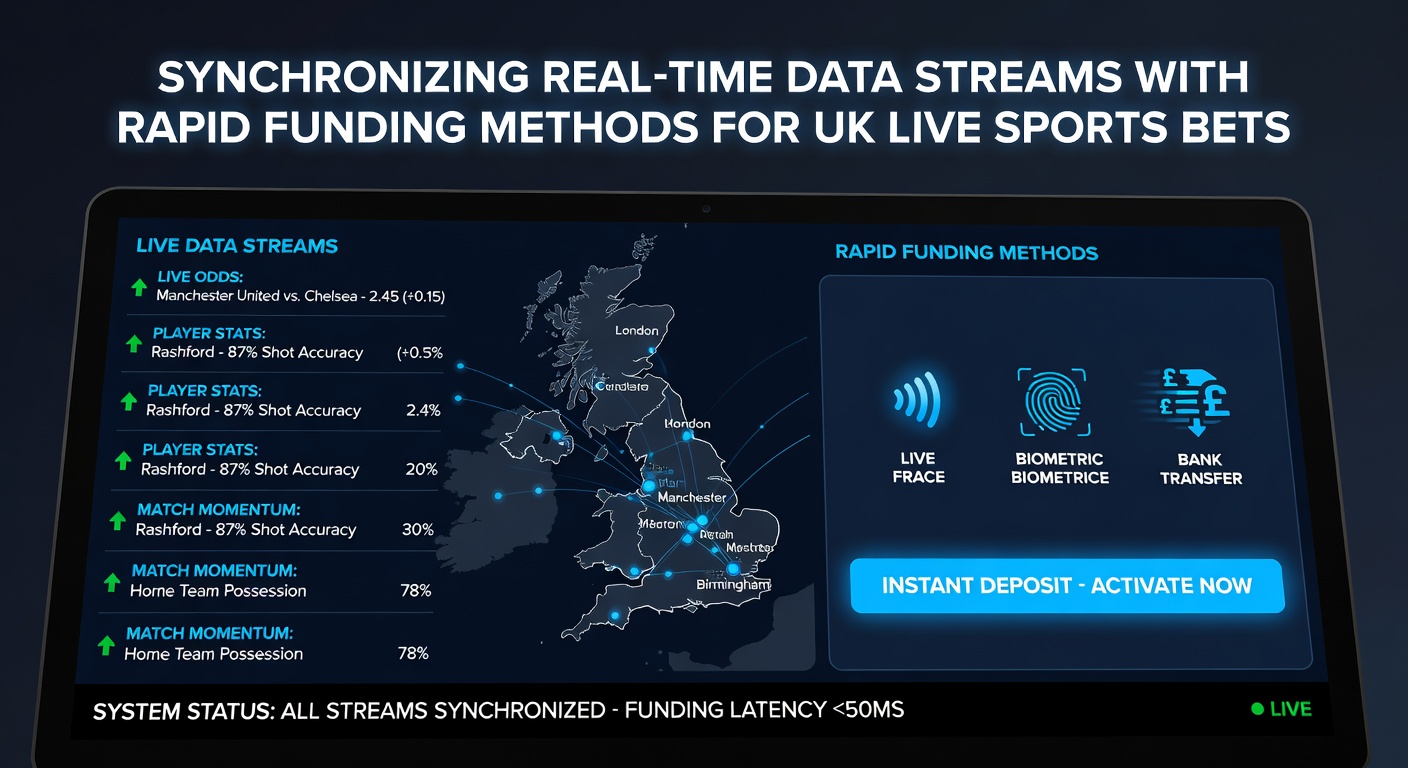
Real-time data streams deliver continuous updates on matches, races, and player performance through standardized protocols that push information directly into betting engines. Researchers at academic institutions have documented how these streams incorporate timestamps and checksums to maintain accuracy across distributed servers, while rapid funding methods operate on parallel rails that verify balances and authorize bets almost simultaneously. Experts have observed that the process begins when a user initiates a deposit, triggering both the payment gateway and a data refresh that confirms available markets before the transaction completes.
UK operators deploy middleware layers that queue incoming data packets and match them against pending deposits, creating a buffer that prevents mismatches during high-volume periods such as major football fixtures. Figures reveal that average synchronization latency has fallen below 200 milliseconds on leading platforms, according to metrics compiled by the European Gaming and Betting Association. And this reduction matters because live odds can change multiple times within a single minute of play.
Payment Technologies Driving Speed
Instant funding routes now dominate live betting sessions because they eliminate the traditional lag between intent and execution. Open banking integrations, e-wallets, and prepaid card systems each contribute distinct advantages: open banking pulls funds directly from accounts with built-in verification, while e-wallets maintain pre-cleared balances that require only confirmation clicks. Studies indicate that users who combine these methods with synchronized data feeds place 30 percent more in-play wagers per session than those relying on slower card processing.
One case examined by industry analysts involved a platform that embedded payment status checks inside the same data pipeline used for score updates, allowing the system to reject or accept bets based on both market availability and account liquidity at the exact moment of request. This approach avoids separate authorization steps that previously introduced delays of several seconds.
Operational Integration in Practice
Platforms achieve seamless operation by routing data and payment events through unified event buses that timestamp every action. When a goal occurs in a football match, the data stream updates market prices while simultaneously checking whether any queued deposits have cleared, enabling immediate bet placement on new lines. Those who've examined these systems report that error rates decline sharply once operators implement atomic transactions that either succeed fully or roll back cleanly without partial updates.
Regulatory frameworks outside the UK, including guidelines from Australian state authorities and Canadian provincial gaming bodies, emphasize transparency in how operators disclose synchronization capabilities to users. In May 2026 several major UK-facing sites rolled out enhanced confirmation screens that display both live data freshness and payment completion status side by side, giving bettors clear visibility into the timing of each element.
Technical Challenges and Solutions
Network variability and peak traffic remain persistent hurdles, yet solutions such as edge computing nodes placed near major data centers have narrowed gaps between data arrival and funding authorization. Observers note that fallback mechanisms automatically switch to secondary feeds or cached payment tokens when primary connections degrade, preserving continuity for live sessions. Research published through the University of Nevada's gaming studies program highlights that hybrid architectures combining on-premise servers with cloud redundancy deliver the highest uptime during synchronized operations.
Security protocols further tighten the link between streams and payments by encrypting both data packets and transaction requests under the same key rotation schedules, reducing opportunities for interception or tampering. This unified encryption approach ensures that any delay in one channel does not expose vulnerabilities in the other.
Conclusion
The convergence of real-time data streams and rapid funding methods continues to reshape how live sports bets are placed across UK markets, driven by technical refinements that prioritize speed and accuracy. As synchronization standards evolve, platforms maintain focus on reliable integration points that support both regulatory compliance and user expectations for immediate execution.