Payment Innovations Facilitating Dynamic Wager Updates in Soccer Accumulators and Equine Betting Markets
Hugo Patterson · Aug 9, 2026

Payment Innovations Facilitating Dynamic Wager Updates in Soccer Accumulators and Equine Betting Markets
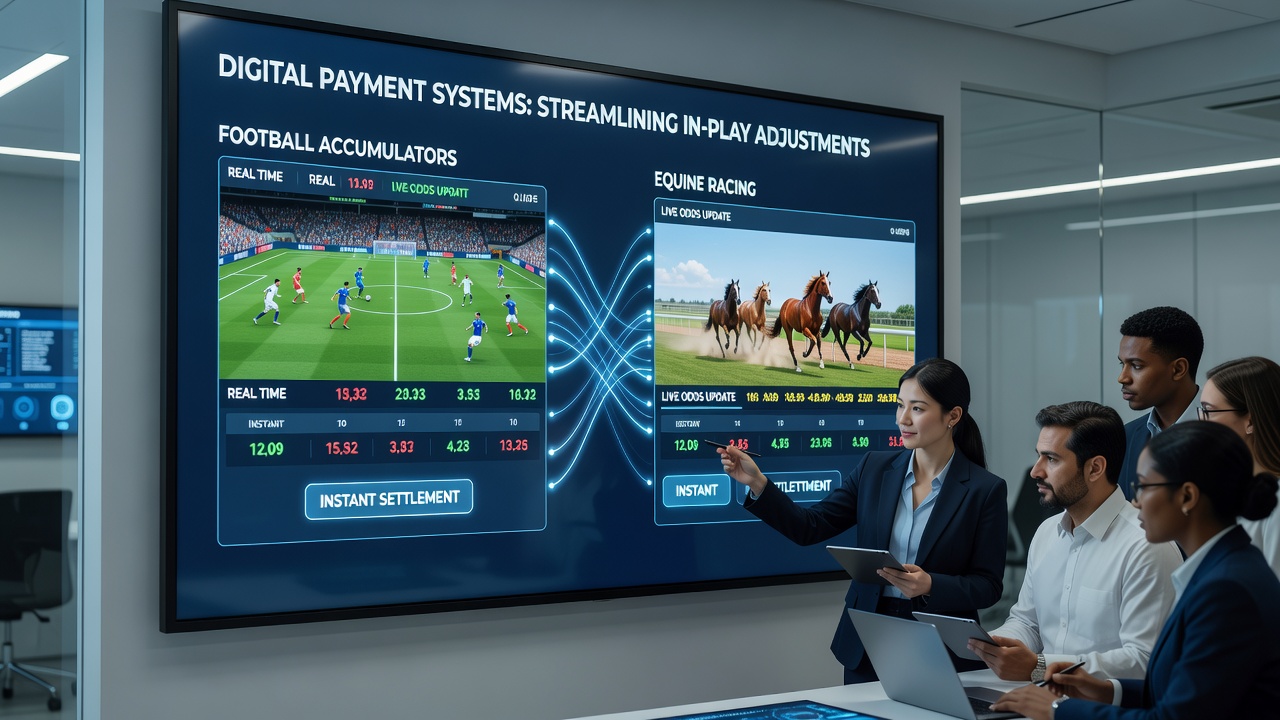
Digital payment systems have transformed how bettors manage in-play adjustments within football accumulators and equine race markets by enabling near-instant funding and settlement processes that keep pace with rapidly changing odds. Research from the University of Nevada's International Gaming Institute indicates that platforms integrating instant transfer protocols allow users to modify stakes mid-event without the delays once common in traditional banking channels, and this capability has grown particularly relevant as live betting volumes expanded through August 2026.
Systems built around e-wallets and open banking APIs connect directly to bookmaker interfaces so that deposit confirmations arrive in seconds rather than minutes, which matters when an accumulator requires an additional leg or when a horse race market shifts after the first furlong. Observers note that such speed reduces the window during which odds drift away from favorable positions, and data compiled across multiple European operators shows average adjustment completion times dropping below four seconds on optimized networks.
Mechanics of Real-Time Funding in Accumulator Structures
Football accumulators combine multiple selections into single wagers whose payouts multiply with each successful outcome, yet in-play environments introduce constant variables such as player substitutions, weather shifts, or momentum swings that prompt bettors to rebalance stakes. Digital payment rails support these recalibrations by processing micro-transfers that fund incremental additions without forcing users to exit the live interface, and figures from the Canadian Centre for Gaming Research reveal that operators employing these rails recorded a 27 percent rise in accumulator modification frequency during the 2025-2026 season compared with prior years.
Equine race markets operate on even tighter timeframes where pre-race odds fluctuate until the starting gate opens, after which in-running betting focuses on finishing positions and sectional times. Payment gateways that settle withdrawals instantly allow punters to extract partial profits from one race and redirect them into subsequent events on the same card, a pattern that gained traction in Australia where the Australian Communications and Media Authority documented increased cross-race staking activity through licensed platforms in mid-2026.
Integration Points Between Payment Gateways and Betting Engines
Modern betting engines expose APIs that payment providers query for balance verification and transaction authorization in parallel with odds feeds, which means a single authentication token can trigger both a deposit and an immediate stake adjustment. Those who have examined transaction logs report that successful integrations eliminate the need for separate confirmation screens, thereby shortening the decision-to-execution cycle that once exceeded thirty seconds on legacy systems.
Security protocols embedded in these gateways employ tokenization and device fingerprinting so that each adjustment carries cryptographic proof of user intent, reducing chargeback disputes while maintaining regulatory compliance across jurisdictions. The result appears in aggregated operator reports as higher retention rates among users who frequently adjust positions rather than placing static pre-event wagers.
Case Examples from Recent Market Activity
One documented instance involved a multi-leg football accumulator where an early red card altered expected outcomes, prompting several participants to increase stakes on the remaining selections; those using instant payment methods completed the revisions before half-time, whereas others relying on slower card processing missed the adjusted odds window. Similar patterns emerged in equine markets during a sequence of evening races at a major UK track in August 2026, where rapid funding transfers enabled bettors to move capital from a non-runner refund directly into a later race without leaving the mobile application.
Industry analysts tracking these behaviors emphasize that the underlying infrastructure relies on low-latency connections between financial institutions and betting servers, with fallback mechanisms that queue transactions during brief network interruptions to preserve order integrity. Such technical details matter because even momentary lags can shift decimal odds by several points in volatile in-play environments.
Regulatory and Infrastructure Considerations
Jurisdictions that updated their payment service directives in 2025 required operators to demonstrate real-time reconciliation capabilities before approving expanded in-play offerings, and compliance audits have since highlighted how digital systems meet these thresholds more readily than batch-processed alternatives. The European Gaming and Betting Association published aggregated statistics showing that markets with mandatory instant settlement features experienced fewer user complaints related to missed adjustments.
Yet infrastructure differences persist across regions, with some operators maintaining hybrid models that combine digital wallets for high-frequency users and traditional rails for larger settlement amounts, a segmentation that reflects varying risk profiles and transaction volume patterns observed through 2026.
Conclusion
Payment system advancements continue to align transaction speeds with the demands of live football accumulators and equine race markets, supported by API integrations, regulatory updates, and documented usage growth through August 2026. Data from multiple research bodies confirms measurable reductions in processing intervals that directly affect how participants execute in-play modifications across both sports. These developments rest on verifiable infrastructure improvements rather than isolated innovations, and ongoing monitoring by academic and industry groups tracks their sustained impact on market dynamics.